
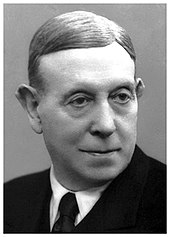
Jean Baptiste Poquelin, better known to history as Molière, was the consummate man of the theatre. Famous in his day (1650s-1670s), Moliere had dropped out of law school and began his career touring the French provinces as an actor in the Bejart troupe. After striking out on his own, failing, and doing a stint in a debtor’s prison, he recovered from these setbacks and became known for writing comedies that incisively mocked the pretensions, hypocrisy, and foibles of the Parisian upper classes. Eventually, Moliere and his company became the Troupe du Roi, obtaining the exclusive privilege of performing at court for the Sun King, Louis XIV, at the Theatre du Palais Royale. During this period until his death in 1673, which occurred after his collapse backstage following his performance of the role of Argan in The Imaginary Invalid, Molière wrote comedic masterpieces still regarded as among the greatest of all time.
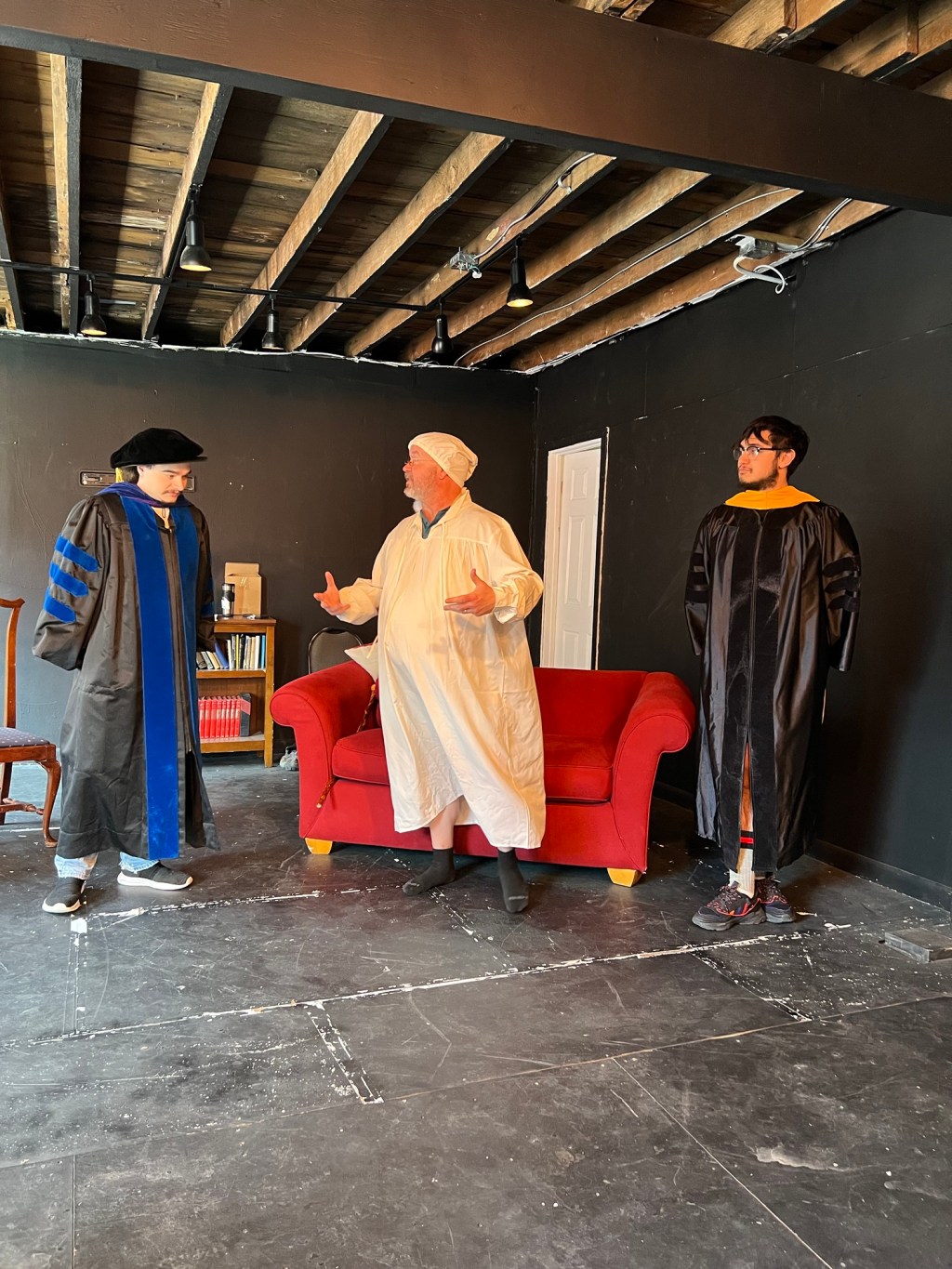
The true test of genius is durability, that is, the best products of the world’s best minds transcend the time and place in which they were conceived, thus remaining relevent and even timely. This final play of Molière excoriates not only the doctors of the 17th century, but also the unquestioning obeisance paid by unthinking sheep to anyone perceived as having expertise and therefore, authority—pretty much anyone parading in a cap and gown. Molière represents the medical profession, a.k.a. “the Faculty,” as being lousy with incompetents and imbiciles motivated by profit and power over credulous patients willing to do anything a doctor tells them to do. He saw that the quackery of 17th century physicians was more dangerous than any disease; and that those who blindly embraced their crackpot ideas suffered terribly at the hands of men who literally did not know what they were doing.
Ridicule is man’s most potent weapon.
Saul Alinsky

We may, and should, laugh at such naiveté: as Saul Alinsky said, “Ridicule is man’s most potent weapon,” something Molière and every great comic writer going back to Aristophanes understood and practiced with venomous glee. Sadly, though, the grotesque ignorance of the doctors in the play is not confined to the 17th century, and neither is blind adherence to authority, nor the suffering and death wrought by each. We need only contemplate our own recent experience of the COVID pandemic to see how this dynamic between those who questioned the experts and those who “followed the Science” widened the political and cultural divide here and abroad. Contention over the efficacy of various remedies–everything from bleach to the “vaccine”—further hardened the camps’ positions. History will rule on all this eventually; nevertheless, it is certain that Molière would have looked at people driving alone in a car while wearing a mask as “imaginary invalids” of the first order, and that procedures such as the prefrontal lobotomy would have caused him to collapse in horror.

This is our final production of our “Miseducation” series. Having explored the issue from absurdist, postcolonial, and naturalistic perspectives, we close with a comedy that makes confetti out of “the Faculty.” Andrew Breitbart famously noted that “politics is downstream of culture,” to which we have appended, “and culture is downstream of academia.” That is, everything that flows out of academia, including scientific breakthroughs and the latest social theories, profoundly influences our lives. It thus warrants scrutiny, and should not be sheltered from ridicule when appropriate. As it is part of our mission to place before the audience thought provoking dramas and comedies, we try to direct those thoughts toward a practical analysis of what is happening to us and around us, and why.
Finally, my notes represent my own reflections on the plays I direct, as my work is profoundly influenced by theatre history and theory. Whatever opinions I have expressed should not be construed as the common beliefs of our company. The Grex comprises a culturally, politically, and intellectually diverse group of actors who do not agree on everything and are not required to. We respect each other’s world views and are unified by our devotion to the art of the theatre. That said, we thank you for your support for our work this season. Without you there is no us.
William Conte, Ph.D, Former Card Carrying Member of “The Faculty”


 THEATRE of the POOR