Thursday – Sunday, May 1, 2, 3, 4, 8, 9, 10, 11 at 7 PM
Performed at the Ft. Caspar Campground: Follow the Signs to the Tent Sites
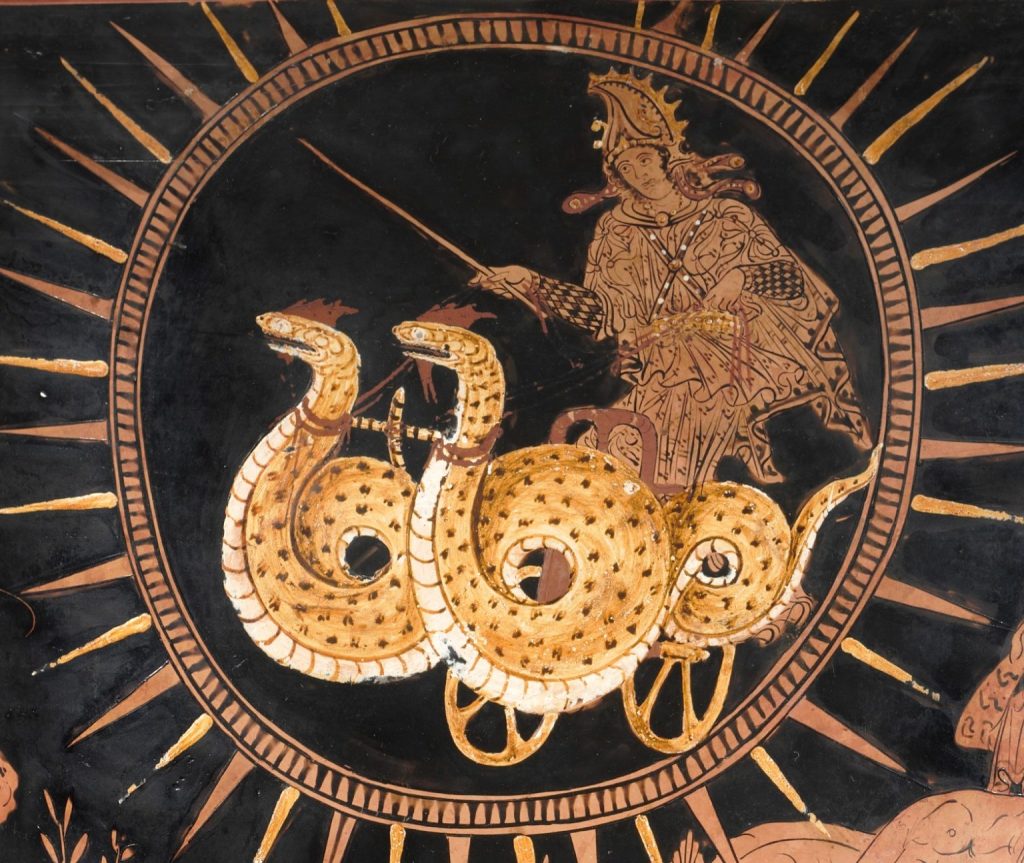
Of all the plays written since Thespis first stepped out of the chorus, the Medea of Euripides is among the most difficult to reconcile. The protagonist, a woman deeply wounded by a treacherous and opportunistic husband, is already a murderess, the stone cold killer of her own brother and anyone else she perceived to be in her way. She appears for the first time as an abject thing, broken, bereft of dignity, cast off like an old appliance. And then she transforms, as protagonists do, but in a manner so horrible that it stands beyond reason. Few plays have left the audience feeling so completely appalled. In this “Year of the Phoenix,” in which TotP focuses on plays about rising from the ashes, Medea is the darkest and most unsettling.

As a company we spent a lot of time sifting through the text in search of answers. How could she commit so monstrous a crime? What justification could possibly mitigate or explain it? We discussed this in the context of recent news about a mother who, sadly, murdered her children; apparently she was quite mentally ill, and it seems she felt this terrible act was the only way to alleviate her suffering. Medea’s anguish over Jason’s betrayal is palpable. Anyone who has endured a spouse’s adultery knows how this feels—it can be maddening—but Medea is not insane. Although Medea’s longing to punish her husband is understandable given the circumstances, we found that the manner she chooses to exact this vengeance is incomprehensible. So we had to ask ourselves, what is this ancient myth really saying to us, and to what end was Euripides using it?
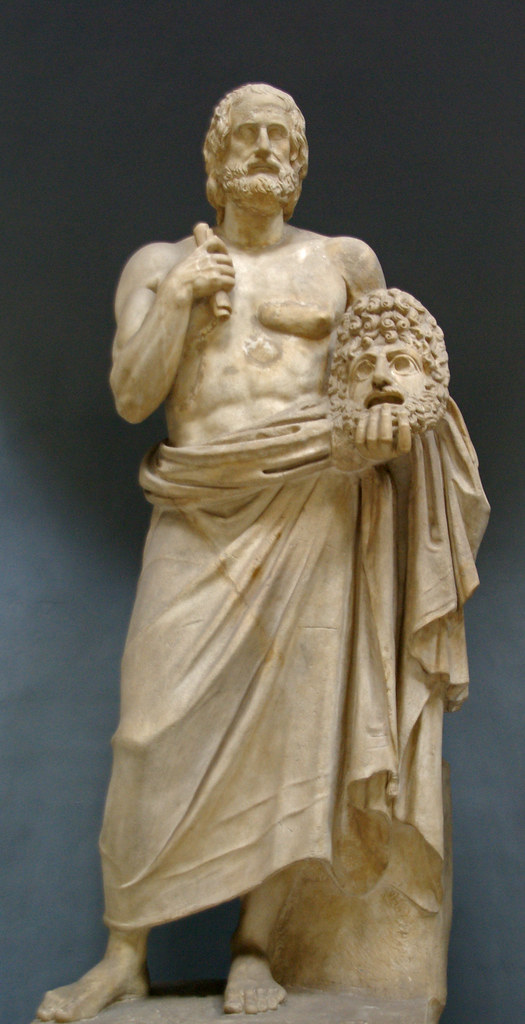
Medea was not well received by the Greek audience of 426 BC. Euripides was a provacteur who used the theatre as a platform for assaults on Greek religion and mores. He placed before the public female characters of unprecedented power and destructive capacity, including Hecuba, Electra, Phaedra, and the Bacchae, who effectively undermined the audience’s assumptions not only about what women can do, but also about what women are. From Euripides’ perspective, they had the potential to embody everything antithetical to Greek patriarchal hegemony, which itself embodied the triumph of reason over intuition, logic over emotion, the rule of law over the anarchy of the mob, and the community over the self. In every instance when Euripides deploys these “feminist” avatars, the catastrophe for individual males or the patriarchy as a whole reduces the “triumph of the masculine” to ashes. From this we discovered that the catharsis in this play, which Aristotle defines as “the release (purgation) of pity and fear,” does not align with his definition. By way of example of true catharsis, he provides the case of Oedipus Tyrannos. In the play, catharsis comes to the audience as a hapless victim of a fate he did not choose nevertheless suffers justly for his sins. The hero, Oedipus, arrives at the truth about himself and takes full responsibility for it. He goes into exile, relieving his people of the plague by accepting the punishment he knows he deserves.
But in Medea, there is no anagnorisis (recognition) that leads to self-knowledge and truth; instead, there is a catastrophic finale that shatters Jason even as the orchestrator of the horror, Medea, is exalted above the stage like a goddess. Rather than being punished, she is revealed in a glorious apotheosis, beyond the reach of justice human or divine. For Aristotle, such a conclusion could never elicit catharsis. The reversal of Jason’s fortunes from warrior-hero to a worm in the dust is gratuitous overkill, the injustice of which raises only disgust. Medea’s final victory cheats justice, which thereby shreds reason, logic, the rule of law, and the fabrics of both human civilization and the universe itself. If anything, it is a “feminist catharsis,” as we realized from our discussion, an Everywoman revenge fantasy as everything creative and beautiful associated with women is abandoned for the sake of inflicting on men the cruelest and most humiliating retribution possible. The characters and the audience learn nothing.

Which leaves us with why. Surely there was more on Euripides’ mind than the rather puerile desire to “shock the squares.” Also, it would be both anachronistic and presentist to conclude that Euripides was asserting feminism per se. However, in the context of Euripides’ time, it makes more sense to conclude that the play does not anticipate feminism, it anticipates Nietzsche. His theory of the “superman” who is “beyond good and evil” posits that the will to power in human beings is its own justification on grounds of natural selection and survival of the fittest. Judeo-Christian ethics predicated on unprovable narratives about “objective morality” serve only to prop up the weak and unworthy at the expense of the strong, thereby retarding if not reversing human evolution. From this perspective, right and wrong, good and evil, are only what we as individuals, and collectively as a society, believe is right or wrong, which does not mean that these things actually are right or wrong. Desiring to inflict the greatest possible pain on her unfaithful husband, Medea chooses to slaughter his children. With this act, she transcends the shackles of conventional morality, of mere “good and evil,” becoming at the end a literal superwoman whose only law is “do what you will.”
In placing this before the audience, Euripides may have been inviting them to reconsider their belief in gods who can do anything with no accountability, as they were the closest things to Nietzschean superman conceivable by the ancient mind. He may have been issuing a warning about what happens when the bulwarks of reason and logic are breeched by female emotionalism and irrationality. In the end, there’s no sure way of knowing what the poet was trying to do, so feel free to speculate. In placing this before you, our audience, in an outdoor setting, we hope to connect with something primal, almost primitive, as a way of amplifying the impact of what it truly means to be beyond good and evil. Medea becomes the phoenix rising from the ashes who by doing so turns the world into ashes.
William Conte, PhD
Artistic Director, Theatre of the Poor
Passing the Hat

Our outdoor productions are always free to the public; we pass the hat at the end to honor the tradition of the bards, buskers, mountebanks, and commedia troupes of our glorious theatrical past. If you’re coming to the show and would like to put something in the hat before hand, here’s your chance to do so. We’re just grateful to have you all attend. Thank you!





Leave a comment