Friday and Saturday, May 29 – 30, 5 PM, Wells Park, K Street, Casper, Free to the Public
George Orwell once noted, “some ideas are so absurd that only an intellectual could believe them.” Conte’s Corollary operates similarly: “some things are so simple that only a theatre scholar could complicate them.” Our latest offering, Playing Peter Pan, illustrates this.
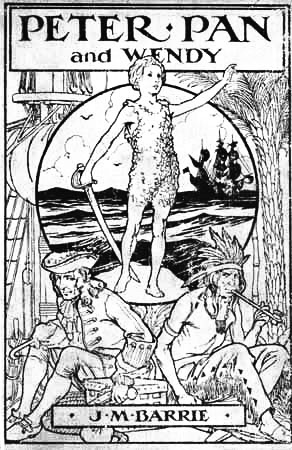
Few things in this life are as simple and carefree as childhood should ideally be. It is why the Latin word for “children” is “liberī”: the ones who are free from the burdens adults must shoulder daily. We must work, but for children to be well, they must play. Of course, adults play too, but it is usually in the context of fantasy role playing games, card or board games, and quasi-athletic activities such as pickleball. These are what philosopher James Carse called “finite games.” Such games are organized by a clear set of rules which governs the thinking and behavior of individuals or teams in competition with each other. Finite games also are characterized by objectives that must be achieved within a given temporal frame, whether they be “quarters,” “halves,” or “innings.” The objectives usually include scoring the most points, arriving at a destination most quickly, or effecting the metaphorical death of the opponent by making it impossible for him to continue. An example of this is checkmate in a chess game, which could theoretically go on forever but which nevertheless reaches a terminus when either checkmate is achieved (or seen as inevitable, in which the loser resigns) or a draw is acknowledged or forced. Even when adults play, we seem to have a job to do.
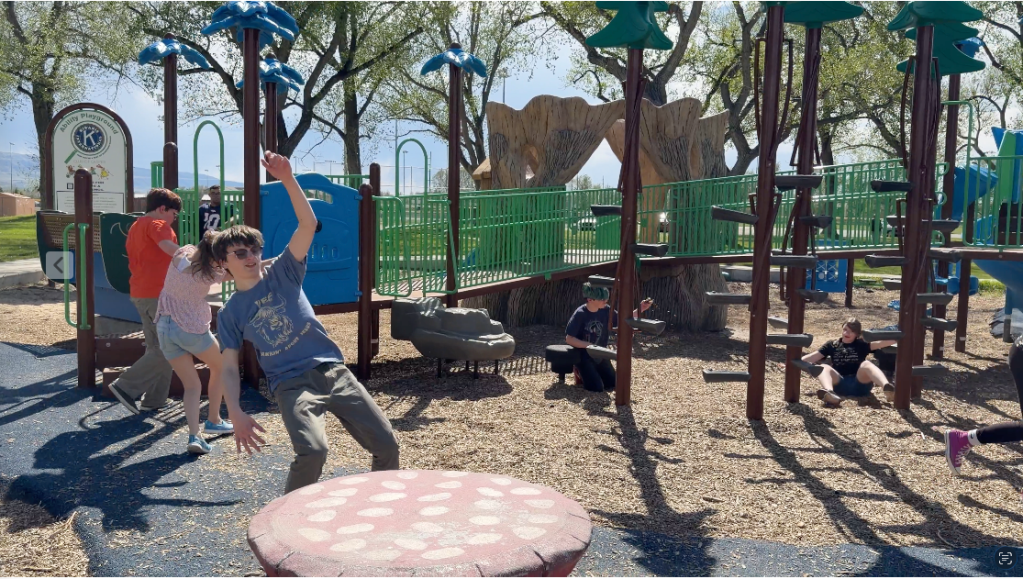
We teach our children to play in this “finite” fashion because ultimately it is important for them to learn about competition, fair play, teamwork, sportsmanship, hard work, winning and losing. But Carse also talks about “infinite” games, which are played for the sake of playing, and during which a state of “flow” occurs that places the activity outside time into a continuous now. There is no competition, only the cooperation required to keep the game going for as long as possible, or until it stops being fun for some reason. The difference between finite and infinite games is evident in the playing of “Ultimate” versus “Freestyle” frisbee. “Ultimate” is a fast paced team sport played in two halves, the objective being to catch the frisbee past the goal line more times than the opponent does. When it’s over, there’s a winner and a loser. “Freestyle,” however, involves two or more individuals spread out across a field or parking lot. They try to avoid allowing the frisbee to fall to the ground for as long as possible; they dazzle each other with trick throws and catches showcasing athleticism and creativity; it ends when everyone has to get on with their lives.
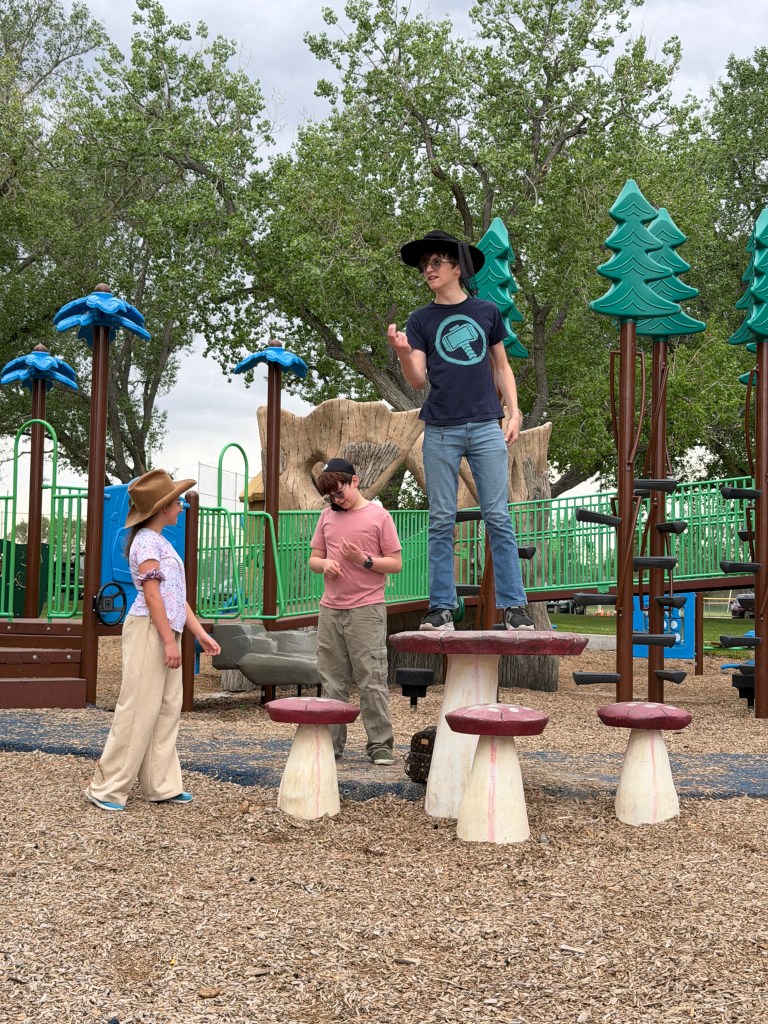
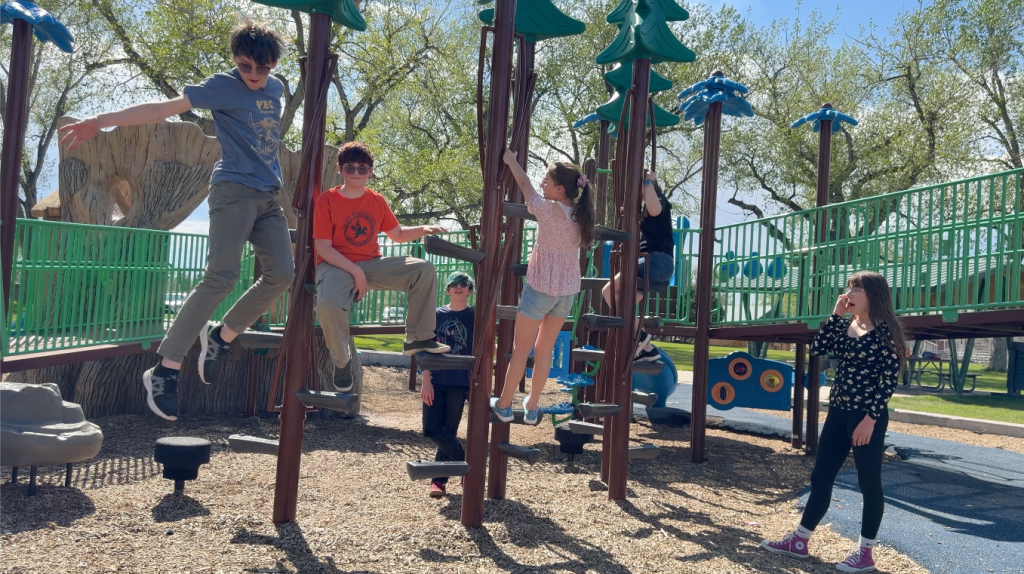
The premise for Playing Peter Pan emerged from the realization that when children are pretending—playing cops and robbers, cowboys and aliens or what have you—they are involved in an infinite game, the rules of which are often made up and adjusted as they go along. They interact, they improvise, they ad lib dialogue, they adapt their environment to the world they are creating in their imagination. In short, they are performing, if not for an audience, then certainly for each other. Their playing becomes a play. And it is at this point where theory and practice merge and beget an improvised, immersive experience for the children who are performing not only for themselves, but for those who are watching, and even for other children who wish to join in the fun. As we rehearsed on the playground, the conditions were different on almost every occasion; nevertheless, the activity of the TotP KIDS often inspired other children who happened to be using the playground to want to play also, and they were welcomed to do so. We make no effort to claim the playground and exclude anyone else from using it; how the TotP KIDS negotiate the unpredictability of the environment is central to the performance. We advise the audience to expect the unexpected, and to be prepared to take in the multifaceted experience that occurs when a bunch of children show up at a playground to run around, imagine, play, and be free.
We thank the parents of the TotP KIDS for supporting them throughout these past five months of workshop and development, and for entrusting their children to our care. Even more, we thank the KIDS themselves: Jed, Eli, Annabelle, and David Haines, and RaeLa and Kenzie Koontz for their dedication, creativity, energy, and the joy they bring.
William Conte, PhD